One of the first questions people ask when considering a yacht charter is simple: how much does it actually cost?
The short answer — it varies.
The real answer — it’s more structured (and more transparent) than most people think.
In this guide, we break down exactly what you’re paying for, what’s included, and what to expect, so you can plan with clarity and confidence.
The Base Charter Price (What You See First)
The base charter fee is the starting point — and this is usually quoted as a weekly rate.
As a general guide:
- 70–90 ft yachts: €40,000 – €80,000 per week
- 100–130 ft yachts: €80,000 – €150,000+ per week
- 130–160 ft yachts: €150,000 – €300,000+ per week
This price depends on several factors:
- Yacht size and brand
- Age and level of refit
- Onboard amenities
- Destination and season (peak vs off-peak)
Think of this as the cost of reserving your private floating villa — fully crewed and ready for your trip.
What’s Included in the Charter Fee
Your base price already covers quite a lot:
- The yacht itself
- Professional crew (captain, chef, stewardesses, deckhands)
- Standard onboard equipment
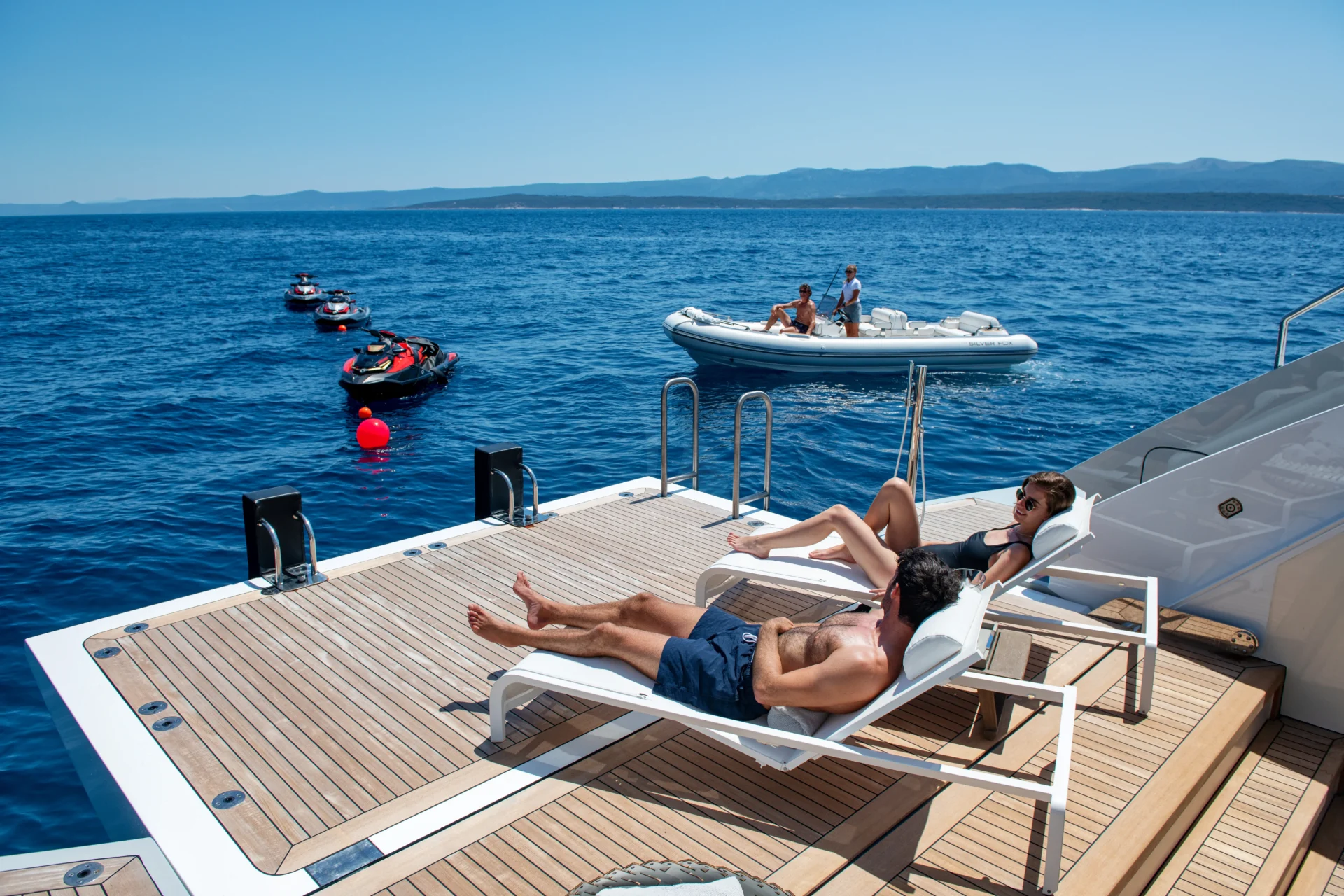
- Jouets aquatiques
- Insurance
So while the headline number might seem high at first, it already includes a full team dedicated to your experience, similar to a private luxury hotel on water.
What’s NOT Included (Important)
This is where most first-time charterers get confused.
The base fee does ne pas include running expenses such as:
- Carburant
- Food and drinks
- Marina and docking fees
- Shore transport and shore reservations
- Crew gratuity (totally at your discretion, read below “Crew Tip” section)
These are variable costs—meaning they depend on how you use the yacht.
What Is APA (Advanced Provisioning Allowance)?
To cover those additional expenses, charters use something called the APA (Advanced Provisioning Allowance).
- Typically 30–35% of the base charter fee, depending on the yacht and cruising itinerary.
- Paid upfront before your trip.
- Managed by the captain throughout your charter with the continuous supervision of your dedicated yacht broker.
The APA works like a prepaid account:
- The crew uses it for fuel, food, drinks, and other expenses.
- You receive a full breakdown of how it’s spent at the end of the charter prior to disembarking.
- Any unused amount is refunded at the end of the charter to you.
It’s designed to keep everything smooth, without you needing to pay for things constantly during your trip.
Taxes & VAT (Depends on Location)
Taxes vary depending on where you charter.
For example:
- méditerranéen destinations (like Spain (Ibiza & Mallorca), Italy, France, Croatia and Greece) all have different VAT rates which are charged on top of the Base Charter Rate as follows:
- Espagne: 21% VAT
- Italie: 22% VAT
- France: 20% VAT
- Croatie: 13% VAT
- Grèce: Varies depending on the size and flag of the yacht between 5.2% to 12%
- Caraïbes charters are exempt from VAT in all locations except The Bahamas, which is 14%.
Your broker will always outline this clearly before you confirm, so there are no surprises.
Crew Tips (What’s Expected?)

Tipping the crew is customary and an important part of the charter experience.
As a guideline:
- 10% – 18% of the base charter fee. Caribbean & American charters being on the higher side and Mediterranean charters being on the lower side.
- Given at the end of the trip
- Based on your satisfaction with the service and entirely at your discretion.
The crew works closely with you throughout your stay, so this is a way of recognising exceptional service.
Important: Most of the time the APA should have enough to cover the Crew Tip but in the event that you spend more during the charter, extra crew tip can be given in cash or wired in the following days after the charter via wire.
A Realistic Example (Putting It All Together)
Let’s say you book a yacht for €100,000 per week:
- Base Charter Fee: €100,000
- APA (example 35%): €35,000
- VAT (example 20%): €20,000
Estimated Total: €155,000 for the week
This would typically cover:
- Accommodation for up to 8–12 guests
- Full crew service
- Food, drinks, fuel, crew tips and activities
When split across a group, it often becomes more comparable to high-end luxury travel — just significantly more private and personalised.
What Affects the Total Cost Most?
If you’re trying to manage your budget, these are the biggest factors:
- Yacht size → the biggest cost driver
- Season → peak summer (July–August) is more expensive
- Destination → some regions have higher taxes or fees
- Fuel usage → more cruising = higher fuel costs
- Lifestyle onboard → premium wines, events, and activities add up
Is It Worth It?
A yacht charter isn’t just about the destination—it’s about the experience.
You’re not booking a hotel, restaurant, and transport separately. You’re combining all of it into one fully tailored experience:
- Private accommodation
- Personal chef
- Custom itinerary
- Dedicated crew
For many, it becomes less about the cost and more about the level of freedom, privacy, and service.
Final Thoughts
Understanding the real cost of a yacht charter helps you plan better and enjoy the experience without second-guessing anything.
With the right guidance, everything is clearly structured, transparent, and tailored to your preferences.
If you’re considering a charter, the best next step is simply to explore your options and see what fits your style of travel.